
10.15.26
The global automobile industry is undergoing one of the most significant transformations in its history. Electric vehicles (EVs), hybrid technology, artificial intelligence (AI), autonomous driving and growing competition from Chinese manufacturers are reshaping the market. At the same time, changing government policies, tariffs, rising manufacturing costs and evolving consumer preferences are forcing traditional automakers to reconsider their strategies.
Worldwide automobile sales remain substantial, with approximately 91.7 million new vehicles forecast for 2025, compared to 88.3 million in 2024. U.S. automobile sales reached approximately 16.2 million vehicles in 2025. However, the industry’s future increasingly depends on manufacturers’ ability to deliver affordable, technologically advanced vehicles while maintaining profitability.
Even more information on this industry is available! Check out our Automobile Industry Center.
Plunkett’s Automobile Industry eBook, latest edition.
1. Electric Vehicle Sales Slow in the U.S. as Hybrids Gain Popularity
One of the automobile industry’s most important trends is the slowdown in U.S. electric vehicle adoption. According to Cox Automotive, U.S. EV sales declined approximately 2% in 2025 to 1.27 million vehicles, representing 7.8% of total automobile sales.
The expiration of federal EV purchase tax credits of up to $7,500 in September 2025 further weakened consumer demand. High vehicle prices, inadequate charging infrastructure, expensive repairs and concerns about driving range continue to discourage potential buyers.
Major automakers have suffered enormous financial setbacks. Ford announced a $19.5 billion EV-related writedown in late 2025, while General Motors recorded a $7.1 billion charge. Stellantis announced a $26 billion restructuring charge in early 2026, and Honda reported approximately $15.7 billion in restructuring charges and writedowns.
Consequently, manufacturers are scaling back ambitious EV production plans and redirecting investments toward more profitable vehicles.
Meanwhile, hybrids are becoming increasingly attractive. U.S. hybrid sales increased nearly 27% in 2025, reflecting consumers’ preference for improved fuel efficiency without the charging limitations associated with fully electric vehicles. Plug-in hybrids and extended-range electric vehicles are also attracting attention as alternatives to conventional EVs.
2. China Emerges as a Dominant Global Automotive Powerhouse
China has become the world’s largest automobile market and one of the industry’s most formidable competitors. The China Association of Automobile Manufacturers reported record sales of 34.4 million vehicles in 2025, up from 31.44 million in 2024.
Chinese manufacturers, particularly BYD and SAIC, are expanding aggressively into international markets with technologically advanced, competitively priced vehicles. China exported approximately 2.6 million electric vehicles and hybrids in 2025, roughly double its 2024 total.
China’s dominance in battery manufacturing, government-supported production capacity and efficient supply chains gives its automakers substantial cost advantages. BYD, for example, offers electric and hybrid vehicles at prices significantly below many competing Western models.
This competition is placing considerable pressure on Volkswagen, General Motors, Ford and other established manufacturers. European automakers are particularly vulnerable as Chinese brands expand throughout Europe and Southeast Asia.
Meanwhile, India represents another important growth opportunity. Passenger vehicle sales reached approximately 4.55 million during India’s 2025-2026 fiscal year. Its expanding middle class and relatively young population offer significant long-term potential.
Mexico also remains a major automotive manufacturing center, exporting approximately 80% of the vehicles it produces, primarily to the United States.
3. Battery Technology and Charging Infrastructure Become Critical Priorities
Battery innovation remains essential to the future of electric transportation. Manufacturers are investing heavily in lithium iron phosphate (LFP) batteries, sodium-ion technology, lithium-silicon materials and other advanced battery systems.
LFP batteries offer lower costs and improved safety because they do not require expensive nickel or cobalt. Sodium-ion batteries could further reduce costs and dependence on Chinese-controlled battery supply chains.
Companies including Tesla, Ford, Rivian, CATL and BYD are investing in battery manufacturing and research. Advanced technologies promise longer driving ranges, faster charging and improved battery durability.
However, significant challenges remain. Public charging networks are still inadequate in many regions, while expanding EV adoption will require substantial investments in electricity generation and distribution. Growing electricity demand from AI data centers may further complicate these challenges.
4. Autonomous Vehicles and Robotaxis Move Toward Commercial Deployment
Autonomous driving technology is progressing from experimentation toward commercial operations. Alphabet’s Waymo, Tesla and Amazon’s Zoox are expanding driverless transportation initiatives, while Uber and Lyft are developing partnerships to incorporate robotaxis into their ride-hailing networks.
Waymo was operating in 10 U.S. cities by early 2026. Tesla launched its robotaxi service in Austin, Texas, in June 2025, subsequently expanding its driverless operations. Uber is pursuing partnerships intended to deploy thousands of autonomous vehicles in coming years.
AI, sophisticated cameras, sensors and advanced mapping software enable these vehicles to navigate increasingly complex driving environments.
Autonomous commercial trucking is also advancing. Aurora Innovation began operating driverless semi-trucks on public highways, primarily transporting commercial freight between major hubs in Texas and Arizona.
Robotaxis could substantially reduce ride-hailing operating costs by eliminating driver expenses. Over time, widespread autonomous transportation may also reduce private automobile ownership, particularly in densely populated urban areas.
Nevertheless, safety, regulatory approval, liability and technological reliability remain important obstacles to widespread adoption.
5. Tariffs and Manufacturing Costs Reshape Global Supply Chains
Trade policies are becoming increasingly important to automotive manufacturers. New U.S. tariffs on imported vehicles and automotive components are raising production costs and encouraging manufacturers to reconsider global supply chains.
Analysts estimated that tariffs could add approximately $2,300 to the cost of manufacturing a vehicle. General Motors anticipated up to $5 billion in gross tariff-related costs in 2025, while Ford expected approximately $3 billion.
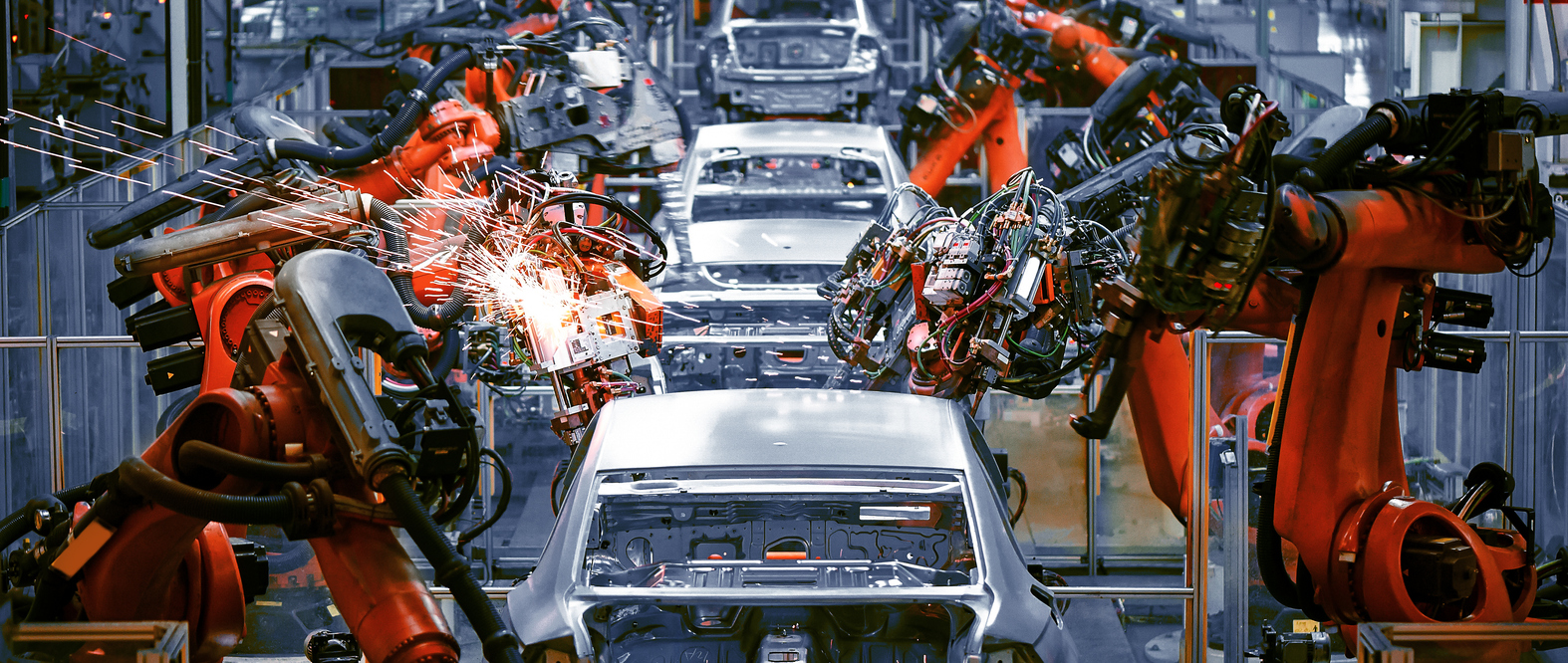
Manufacturers are responding by investing in domestic production, automation and more flexible factories. Robotics, advanced manufacturing software and lean inventory systems are helping reduce labor requirements and improve efficiency.
At the same time, demand for profitable pickup trucks, SUVs and crossovers remains strong. Ford and General Motors have largely abandoned traditional sedans in favor of these popular vehicle categories.
6. Safety Technology and AI Transform Automobile Insurance
Automobile safety continues to improve through advanced driver-assistance systems, including automatic emergency braking, adaptive cruise control, lane-keeping assistance and pedestrian detection.
Artificial intelligence is also transforming automobile insurance. Insurers increasingly utilize telematics systems to monitor driving behavior, mileage, braking patterns and vehicle usage.
Companies such as Progressive offer usage-based insurance programs that reward safer drivers with potentially lower premiums. However, these technologies also raise privacy concerns.
Autonomous vehicles present additional insurance challenges. As transportation shifts toward robotaxis and shared mobility, insurers must develop new policies addressing software failures, vehicle manufacturers, fleet operators and passenger liability.
7. Alternative Fuels and Efficiency Remain Important
Although EVs attract considerable attention, alternative fuels continue to play important roles. Natural gas-powered trucks and buses offer potential operating cost advantages for commercial fleets. Hydrogen fuel-cell vehicles remain under development, although fueling infrastructure and hydrogen production costs present significant obstacles.
Traditional gasoline vehicles are also becoming more efficient through lightweight materials, improved engines and advanced transmissions.
8. The Future
The automobile industry’s future will be defined by competition between electric vehicles, hybrids and conventional automobiles; China’s expanding global influence; rapid advances in AI and autonomous transportation; and the industry’s ability to control costs.
Manufacturers that successfully combine affordability, technological innovation, efficient production and consumer-focused vehicle designs will be best positioned to compete in an increasingly complex global market.
Key Concepts: Cars, trucks, economics, transportation, entrepreneurship, finance, highways, globalization, hybrids, innovation, electric vehicles (EVs), self-driving vehicles, marketing, research, tariffs
Source: Plunkett Research, Ltd., Copyright © 2026

