
3.7.26
The artificial intelligence (AI) and machine learning (ML) industry has entered a period of extraordinary expansion, reshaping industries, business models and global competition. Worldwide spending on AI is projected at approximately $1.5 trillion in 2025, with forecasts reaching $2.02 trillion in 2026, including chips, servers, models, software and services. This dramatic investment surge reflects AI’s evolution from a specialized analytical tool into a foundational technology underpinning economic growth, national strategy and corporate transformation.
Even more information on this industry is available! Check out our Artificial Intelligence (AI) Industry Center.
Plunkett’s Artificial Intelligence (AI) eBook, latest edition.
1. The Generative AI Revolution
The most visible and disruptive trend is the rapid rise of generative AI (GenAI). Since the late-2022 introduction of ChatGPT, generative systems capable of producing text, images, audio, video and software code have captured global attention. Large language models (LLMs) such as OpenAI’s GPT family, Google’s Gemini and Anthropic’s Claude are now embedded into productivity platforms, search engines, cloud services and enterprise applications.
These tools have transformed how knowledge work is performed. AI copilots assist with drafting reports, analyzing data, writing software, generating marketing materials and automating routine communications. Increasingly, “AI agents” are being developed to autonomously perform multi-step tasks such as booking travel, conducting research or managing workflows.
However, generative AI has also sparked debates around copyright, misinformation, academic integrity and the ethical use of training data. As these systems become more powerful and accessible, policymakers and enterprises are grappling with governance frameworks that encourage innovation while managing risk.
2. AI Embedded Across Core Industries
Beyond generative AI, machine learning has become deeply embedded in core business functions. AI-driven recommendation engines pioneered by companies such as Amazon and Netflix demonstrated the commercial power of personalization. Today, recommendation algorithms drive digital advertising, retail sales, media streaming and financial services.
In finance, AI supports fraud detection, credit underwriting, algorithmic trading and risk modeling. In retail and e-commerce, predictive analytics optimize pricing, inventory management and customer targeting. In logistics, machine learning enhances route optimization, warehouse automation and supply chain forecasting.
Health care represents one of the most transformative frontiers. AI systems analyze medical imaging, predict patient outcomes and accelerate pharmaceutical research. Machine learning models assist in drug discovery by identifying promising compounds faster and at lower cost. Generative AI tools are increasingly used to transcribe and summarize clinical notes, reducing administrative burdens on physicians and nurses.
Manufacturing and industrial sectors are similarly benefiting from AI-powered predictive maintenance, quality control and production optimization. By analyzing sensor data in real time, machine learning systems can anticipate equipment failures, reduce downtime and improve operational efficiency.
3. Robotics and Intelligent Automation
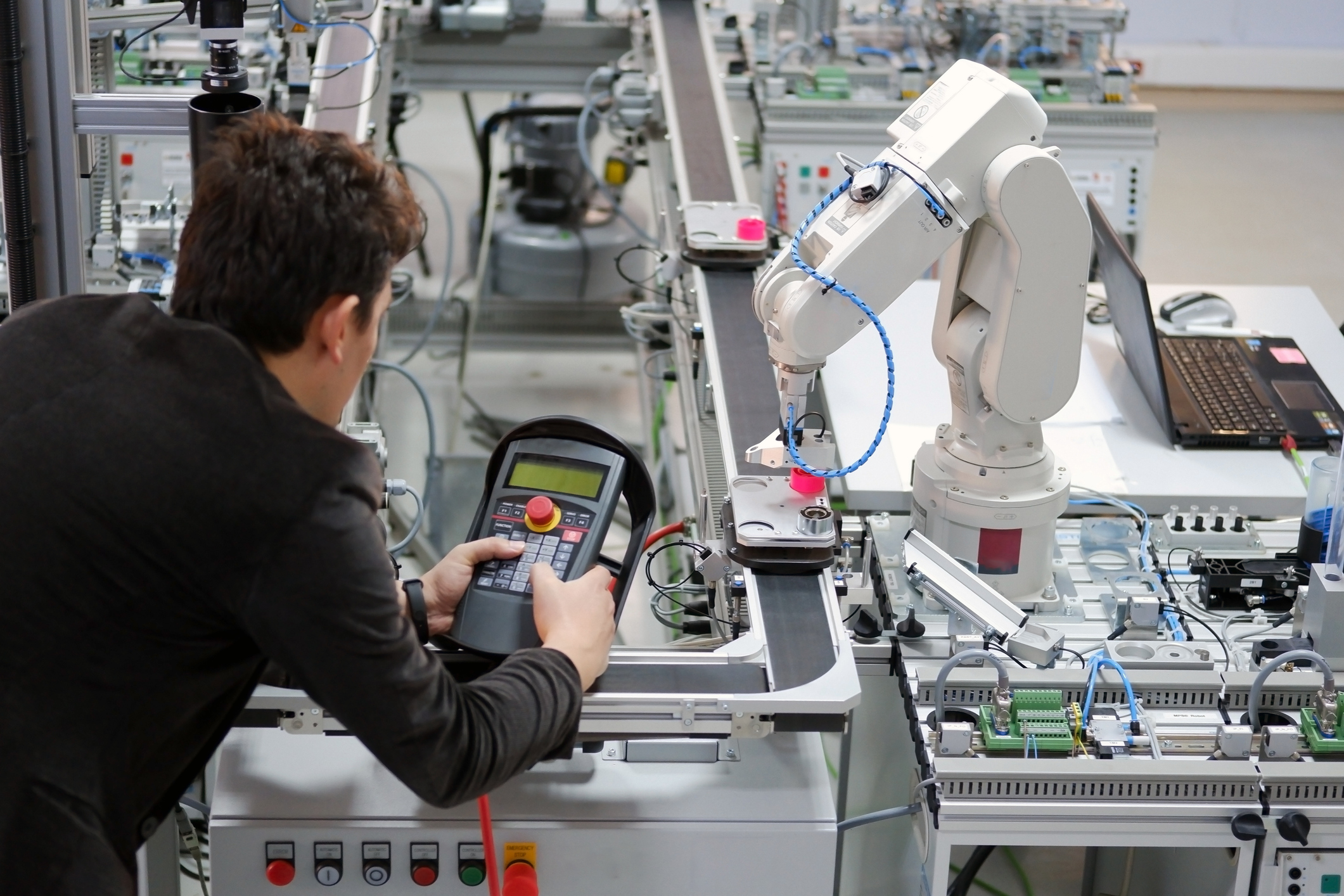
Robotics, enhanced by AI and machine learning, is revolutionizing both physical and digital work. In warehouses and distribution centers, AI-powered robots sort, pick and transport goods with growing autonomy. Ports, airports and manufacturing plants deploy robotics to improve speed, safety and cost efficiency.
Collaborative robots, or “cobots,” are increasingly designed to work safely alongside humans, augmenting rather than replacing human labor. In health care settings, robots assist with surgery, rehabilitation and hospital logistics. Service robots are becoming more common in hospitality, retail and home environments.
Simultaneously, robotic process automation (RPA) combined with AI is automating digital workflows in finance, insurance, human resources and customer service. Intelligent automation platforms can process invoices, review contracts, manage compliance documentation and respond to customer inquiries. While these technologies raise concerns about job displacement, they also create new opportunities for higher-value roles focused on oversight, strategy and innovation.
4. The Semiconductor and Infrastructure Arms Race
Advanced AI systems depend on enormous computing power, fueling intense global competition in semiconductor design and manufacturing. Graphics processing units (GPUs), specialized AI accelerators and custom application-specific integrated circuits (ASICs) have become strategic assets. Innovations in chip architecture, chiplets and advanced fabrication at nanometer scales are central to training increasingly complex models.
The growth of AI workloads is also driving a boom in data center construction. Hyperscale cloud providers and enterprise operators are expanding facilities to accommodate AI training and inference. This expansion carries significant energy demands, prompting investment in grid modernization and renewable energy integration. Energy efficiency and advanced cooling technologies are becoming critical priorities as AI infrastructure scales.
5. AI, IoT and Edge Computing Convergence
Another key trend is the convergence of AI with the Internet of Things (IoT) and edge computing. Billions of connected devices generate continuous streams of data from factories, vehicles, cities and agricultural operations. AI systems analyze this data to optimize processes in real time.
In smart cities, AI-powered analytics improve traffic management, energy efficiency and public safety. In agriculture, machine learning models guide irrigation, fertilization and crop monitoring. In industrial settings, edge computing allows data to be processed locally, reducing latency and enabling near-instant decision-making.
Edge AI is particularly critical for autonomous vehicles and advanced robotics, where milliseconds matter. By combining cloud-scale training with localized inference, organizations can balance computational efficiency with real-time performance.
6. Autonomous Systems and Mobility
Autonomous vehicles remain one of AI’s most ambitious applications. Companies are investing heavily in self-driving cars, trucks, drones and delivery robots. While full autonomy faces technical and regulatory hurdles, progress in computer vision, sensor fusion and real-time decision-making continues.
Autonomous systems extend beyond transportation. AI-driven drones monitor infrastructure, support disaster response and conduct agricultural surveys. In defense and security contexts, autonomous systems are reshaping strategic planning and ethical debates.
7. Ethical, Regulatory and Workforce Implications
As AI capabilities expand, so do societal implications. Concerns about privacy, algorithmic bias, misinformation and AI-enabled cybercrime are intensifying. Governments around the world are developing regulatory frameworks to address transparency, accountability and safety.
Workforce disruption is another central issue. Automation and generative AI may displace certain tasks and roles, particularly in routine knowledge work and administrative functions. At the same time, demand is rising for AI engineers, data scientists, cybersecurity professionals and specialists in AI governance.
Organizations are increasingly investing in workforce reskilling and digital literacy programs to ensure employees can collaborate effectively with AI systems. The long-term economic impact of AI will likely depend on how successfully societies manage this transition.
8. AI as a Foundational Economic Driver
Perhaps the most important overarching trend is AI’s transformation into a foundational economic driver. No longer confined to research labs or niche analytics teams, AI is embedded across enterprise software, consumer applications and industrial systems. It shapes product development, customer engagement, supply chains and national competitiveness. Projected spending is expected to surpass $2 trillion within the next year.
9. The Future
AI is poised to remain one of the most influential technologies of the 21st century. The industry’s future will be defined not only by technical breakthroughs but also by responsible governance, infrastructure investment and the ability to integrate AI thoughtfully into society.
In sum, the AI and machine learning industry stands at a pivotal moment. Generative AI, intelligent automation, semiconductor innovation, IoT convergence and evolving regulatory frameworks are collectively reshaping the global economy. Organizations that strategically adopt and govern these technologies will define the next era of competitive advantage.
Key Concepts: Artificial intelligence, AI, machine learning, robotics, autonomous, self-driving, M2M, IoT, internet of things, big data, smart cities, OpenAI, ChatGPT, StabilityAI, anthropic, agentic AI
Source: Plunkett Research, Ltd., Copyright © 2026

