
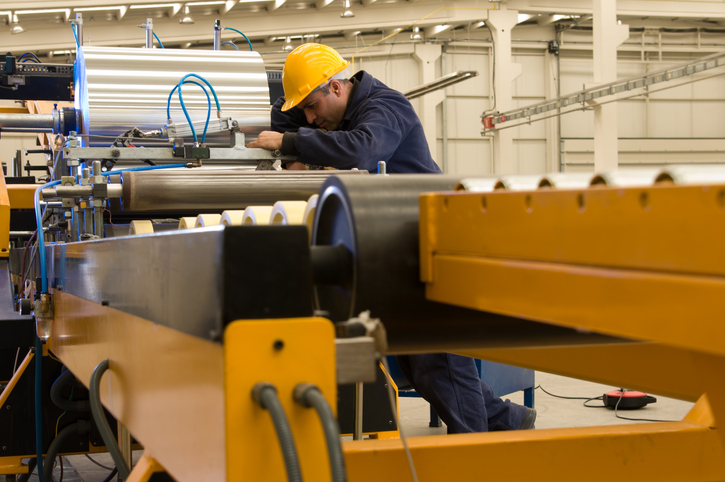
Credit: iStock.com/LeventKonuk
7.10.25
The engineering and research sectors are undergoing a sweeping evolution. Once confined to government labs or corporate R&D centers, innovation is now a global enterprise, shaped by advances in digital technologies, cross-border collaboration, and a pressing need to address global challenges—from clean energy to personalized medicine.
Even more information on this industry is available! Check out our Engineering Industry Center.
Plunkett’s Engineering & Research Industry eBook, latest edition.
1. Unprecedented Growth in Global R&D Investment
R&D spending has reached historic highs, exceeding $2.7 trillion globally in 2024. While the United States continues to lead in absolute R&D investment, the global distribution of innovation is shifting rapidly. Nations such as China, India, Israel, and South Korea are significantly ramping up their investments, with China investing over $780 billion last year alone.
China’s strategy combines massive funding for research parks, a sharp rise in science and engineering graduates, and a focus on patent development. Meanwhile, India is emerging as a critical player through its biotech corridors and defense research investments. Countries like Singapore and Taiwan are also fostering innovation through robust IP frameworks and incentives for high-tech sectors.
This global expansion has ushered in a more collaborative and competitive R&D environment. Companies now operate across multiple international hubs, tapping into local expertise, cost advantages, and government support programs.
2. Artificial Intelligence: The New Research Assistant
Artificial Intelligence (AI) has become the backbone of modern engineering and scientific research. In engineering, AI is transforming traditional design processes through simulation, predictive modeling, and optimization. These capabilities reduce time-to-market and enable agile, high-precision engineering—especially critical in sectors like aerospace, automotive, and manufacturing.
In the research realm, AI’s impact is even more profound. It accelerates drug discovery by analyzing molecular structures, predicts disease outbreaks using vast health datasets, and aids in materials science by modeling the behavior of new compounds. AI is also vital for managing the massive volumes of data produced by research teams and instruments, particularly in genomics, climate science, and particle physics.
As AI models become more interpretable and scalable, their integration into day-to-day R&D will deepen, changing the very nature of how research questions are framed and answered.
3. The Biotechnology Revolution
We are at the cusp of a “bioindustrial era,” where biology is increasingly used as a platform for innovation. This trend is driven by breakthroughs in genetic engineering (e.g., CRISPR), biomanufacturing, and synthetic biology.
Pharmaceutical companies are using advanced genomic techniques to develop targeted therapies, dramatically improving treatment outcomes in oncology and rare diseases. At the same time, bioengineering is being applied to agriculture, with genetically edited crops enhancing yield, resistance, and sustainability.
Biomanufacturing is another key frontier. Engineered microbes are producing chemicals, enzymes, and even plastics more efficiently and sustainably than traditional methods. Countries such as Singapore, China, and the U.S. are investing in large-scale biotech campuses to support these developments.
Moreover, ethical and regulatory challenges in biotechnology are prompting the rise of new frameworks for responsible innovation, balancing progress with public trust and safety.
4. Sustainable Engineering and Electrification
The global engineering landscape is being reshaped by the urgent need for sustainable solutions. Electrification, particularly in transportation, is at the forefront. Electric vehicles (EVs) and plug-in hybrid electric vehicles (PHEVs) are gaining mass-market acceptance, with more than 14 million EVs sold in 2023 alone.
Automakers are investing heavily in battery research to improve energy density, lifespan, and charging speeds. However, the EV transition faces challenges such as the scarcity of rare earth materials, dependence on Chinese supply chains, and the uneven availability of charging infrastructure.
Hydrogen fuel cell technology, long viewed as futuristic, is gaining traction in commercial transportation, particularly for long-haul trucking and maritime applications. Countries like Japan and Germany are spearheading pilot projects and infrastructure development for hydrogen ecosystems.
Beyond transportation, engineering firms are also advancing in carbon capture, renewable energy integration, and the development of sustainable materials—key enablers of a circular economy.
5. The Rise of Commercial Space Research
Once the sole domain of government agencies, space exploration and research are rapidly commercializing. Companies like SpaceX, Blue Origin, and Rocket Lab are redefining launch economics through reusable rocket technology, significantly reducing the cost of accessing space.
These advancements are opening up new opportunities: high-speed global internet via satellite constellations, space-based manufacturing of semiconductors and pharmaceuticals, and even space tourism. For engineering teams, designing equipment that can withstand space environments—extreme temperature, radiation, and microgravity—is an expanding area of innovation.
Moreover, geopolitical interests are spurring renewed investment in space by nations seeking strategic advantages. This includes not only defense applications but also space mining, surveillance, and climate monitoring.
The increasing presence of private actors is leading to more dynamic regulatory discussions and public-private partnerships that will shape the next chapter of space research.
6. Advanced Materials and Robotics Redefining Manufacturing
The integration of new materials and automation technologies is revitalizing the manufacturing landscape. High-performance polymers, nanocomposites, and carbon-based materials (such as graphene) are enabling lighter, stronger, and more energy-efficient components for industries ranging from aerospace to consumer electronics.
In parallel, industrial robotics and automation systems—powered by AI and computer vision—are improving efficiency and consistency in manufacturing. Robotics are particularly crucial in high-cost labor markets, where they offer competitive alternatives to offshoring.
Smart factories, equipped with IoT sensors and real-time data analytics, are becoming more common. These “Industry 4.0” environments allow predictive maintenance, digital twins for production lines, and seamless integration between design, testing, and manufacturing functions.
This convergence of materials science and robotics not only boosts productivity but also fosters greater customization and resilience in supply chains.
7. Future Outlook
The engineering and research sectors are no longer insulated, siloed domains. Instead, they are dynamic, interconnected ecosystems where cross-disciplinary collaboration and global integration are the norm. The convergence of AI, biotechnology, sustainable technologies, and advanced manufacturing is pushing the boundaries of what’s possible.
For professionals, this means acquiring hybrid skills that span data science, systems thinking, and domain expertise. For organizations, it requires reimagining how R&D is structured, funded, and scaled—often through partnerships that cross borders and sectors.
Most importantly, the innovation economy of 2025 and beyond will be defined by its ability to address humanity’s most pressing challenges: health, sustainability, resilience, and knowledge. Engineering and research, now more than ever, stand at the heart of that mission.
Key Concepts: Research, CAD CAM, internet, design, software, networks, artificial intelligence (AI), hardware, jobs, innovation, investing, marketing, finance, technology, business
Source: Plunkett Research, Ltd., Copyright © 2025

