
1.20.26
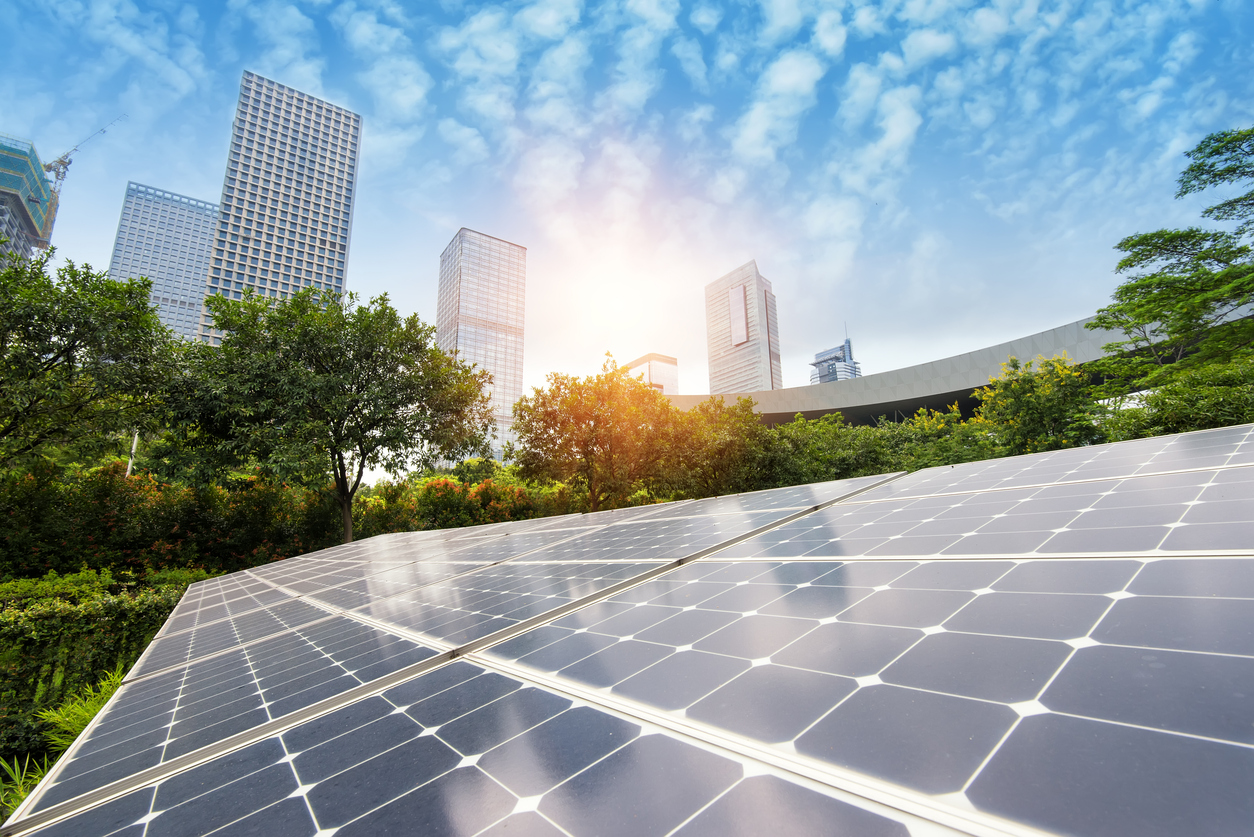
The global renewable energy industry is undergoing one of the most profound transformations in modern economic history. Solar power, wind power and a wide range of supporting clean-energy technologies are expanding rapidly as governments, utilities, corporations and consumers pursue lower emissions, improved energy security and long-term cost stability. While fossil fuels still account for the majority of global electricity generation, renewables are steadily reshaping the world’s energy mix and investment priorities.
Even more information on this industry is available! Check out our Solar Power Industry Center.
Plunkett’s Solar, Wind & Renewable Energy Industry eBook, latest edition.
1. Solar Power Moves into the Mainstream
Solar power remains one of the fastest-growing segments of the renewable energy market. Over the past two decades, dramatic declines in panel costs, combined with rising conversion efficiency, have transformed solar from a niche technology into a mainstream source of electricity. Global installed solar photovoltaic (PV) capacity has expanded from only a few gigawatts in the early 2000s to nearly two terawatts by 2024, making solar one of the most widely deployed renewable technologies worldwide.
Government incentives have played a critical role in this expansion. Tax credits, feed-in tariffs and renewable portfolio standards have helped accelerate adoption, particularly in the U.S., Europe and parts of Asia. However, the policy environment remains volatile. In the U.S., changes to tax incentives and domestic content requirements have slowed some new installations, even as falling panel prices continue to improve solar’s long-term economics.
Utility-scale solar has emerged as a dominant force within the industry. Early concentrating solar power (CSP) projects proved expensive and complex, leading developers to shift toward massive installations of low-cost solar panels. These large solar farms can now deliver electricity at prices competitive with natural gas in many regions. At the same time, rooftop solar continues to expand, especially in sunny regions, although reduced net-metering incentives in some U.S. states may temper residential growth.
Technological innovation remains a major driver of solar’s momentum. Advances in thin-film solar, perovskite materials and quantum dots promise higher efficiency and lower costs. Hybrid panel designs and next-generation manufacturing techniques suggest that solar’s performance ceiling has not yet been reached, reinforcing its role as a cornerstone of future energy systems.
2. Wind Power Scales Up—Onshore and Offshore
Wind power has followed a similar growth trajectory, supported by major engineering advances and aggressive government support. Modern wind turbines are taller, more reliable and far more productive than earlier designs, delivering significantly higher output per turbine while reducing downtime and maintenance costs. As a result, wind has become one of the most cost-competitive sources of new electricity generation worldwide.
Global wind capacity exceeded one terawatt in 2024 and is forecast to approach two terawatts by 2030. Onshore wind remains the dominant segment, particularly in regions with abundant land and strong grid infrastructure. Texas, for example, has become the largest wind-power producer in the U.S., benefiting from vast open land and an efficient statewide transmission network.
Offshore wind represents one of the industry’s most promising growth areas, especially in Europe and parts of Asia where land availability is limited and offshore wind resources are strong and steady. Large projects in the UK, Taiwan and mainland Europe demonstrate the potential scale of offshore wind, although high construction costs, permitting delays and political opposition remain significant hurdles. In the U.S., offshore wind is progressing more slowly, but several large projects along the East Coast are now under development.
Despite its progress, the wind sector faces challenges. Rising interest rates, supply-chain constraints, labor shortages and shifting tax policies have placed financial pressure on developers. Nevertheless, wind power remains a critical component of global decarbonization strategies and long-term electricity planning.
3. Energy Storage Becomes a Critical Enabler
As solar and wind capacity expands, energy storage has become one of the most important enabling trends in the renewable energy ecosystem. Because renewable generation is inherently intermittent, large-scale storage systems are essential to balance supply and demand, stabilize grids and replace fossil-fuel “peaker” plants.
Battery storage installations are growing rapidly, particularly in the U.S., Europe and China. Lithium-ion batteries dominate today’s market, but alternatives such as iron-air, sodium-ion and other next-generation chemistries are attracting significant investment. Large battery projects now provide hundreds of megawatts of capacity, allowing utilities to store excess solar and wind power and deploy it during peak demand periods.
Beyond batteries, other storage technologies—including pumped hydro, compressed air and hydrogen-based systems—are gaining renewed attention. These solutions may play a key role in long-duration storage, particularly as renewable penetration rises further.
4. Grid Modernization Takes Center Stage
The rapid expansion of renewable energy is placing unprecedented strain on aging electric grids. Much of today’s transmission infrastructure was built decades ago and was never designed to handle large volumes of variable, distributed generation. As a result, grid bottlenecks, long interconnection queues and rising transmission losses are becoming major constraints on renewable deployment.
Massive investment is now required to modernize and expand transmission networks. Smart grid technologies—digital sensors, automated controls and real-time data systems—are being deployed to improve reliability and integrate distributed energy resources more efficiently. Long-distance transmission lines are also critical for moving renewable power from remote solar and wind sites to population centers.
Grid expansion is further complicated by surging electricity demand from electric vehicles and power-hungry artificial intelligence data centers. These trends are accelerating the need for new generation, storage and transmission capacity, reinforcing the central role of renewables in meeting future demand.
5. Green Hydrogen Gains Momentum
Green hydrogen has emerged as one of the most closely watched trends in renewable energy. Produced using renewable electricity to split water via electrolysis, green hydrogen offers a potential solution for long-duration energy storage and for decarbonizing hard-to-abate industries such as steel, chemicals and heavy transport.
While costs remain high and storage challenges persist, governments and corporations are investing billions of dollars in pilot projects and hydrogen hubs. Large-scale initiatives in Australia, Africa, the U.S. and Europe suggest that green hydrogen could become a key pillar of the future clean-energy economy, particularly as renewable electricity costs continue to fall.
6. A More Integrated Renewable Energy System
The renewable energy industry is no longer defined solely by solar panels and wind turbines. Instead, it is evolving into a highly interconnected ecosystem that includes energy storage, advanced grids, electric vehicles, green buildings and emerging fuels such as hydrogen. Corporations are increasingly signing long-term renewable power contracts, while consumers show growing willingness to pay for clean electricity.
Despite ongoing economic, political and technical challenges, the long-term outlook for solar, wind and renewable energy remains strong. Falling costs, technological innovation and mounting pressure to reduce emissions ensure that renewables will remain central to global energy growth for decades to come.
Key Concepts: Wind power, business, science, economics, solar, geothermal, finance, sustainability, globalization, renewable, innovation, investing, marketing, power, electricity, green hydrogen, artificial intelligence (AI)
Source: Plunkett Research, Ltd., Copyright © 2026

