
9.23.26
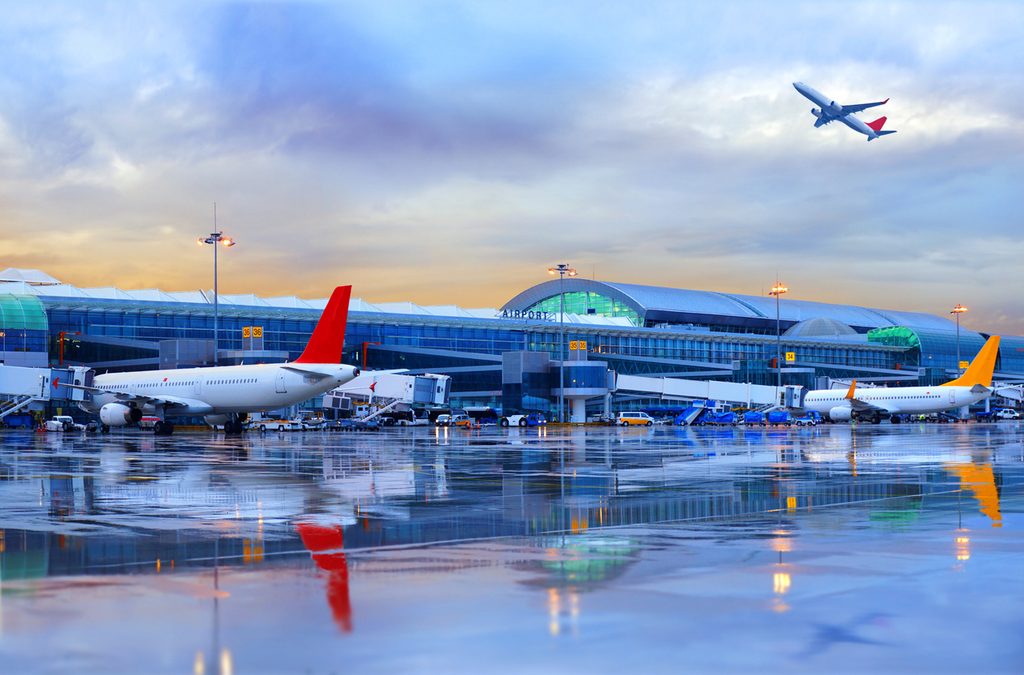
The airline, hotel and travel industry is undergoing broad transformation as companies adapt to changing consumer tastes, new technologies and increasingly intense competition. The global travel and tourism sector supported about 366 million jobs in 2025, illustrating the industry’s enormous economic significance. Across airlines, hotels, cruises and travel booking, some of the most important trends are the growth of premium services, artificial intelligence, more efficient transportation, digital customer relationships, experiential tourism and new forms of lodging.
Even more information on this industry is available! Check out our Travel Industry Center.
Plunkett’s Airline, Hotel & Travel Industry eBook, latest edition.
1. The premiumization of air travel.
Airlines are placing greater emphasis on business class, premium economy, extra-legroom seats and airport lounges rather than competing primarily on inexpensive economy seats. Scheduled U.S. domestic business- and first-class seats in 2026 were 27% above January 2020 levels, compared with a 10% increase in economy seats. Airlines have found that many consumers are willing to pay substantially more for comfort, convenience and better service.
2. Airlines are expanding their reliance on ancillary fees and loyalty programs.
Revenue from checked baggage, preferred seats, food, beverages and other optional services has become increasingly important. Carriers are also generating substantial revenue from relationships with credit card companies and frequent flyer programs. Southwest Airlines illustrates how low-cost and legacy business models are converging. The airline ended its longstanding free-bag policy for most travelers, adopted assigned seating and introduced additional premium options.
The distinction between discount carriers and traditional airlines is consequently becoming less clear. Budget airlines are adding premium products and international routes, while legacy carriers offer basic economy products in order to compete on price. This creates a travel market in which airlines increasingly serve very different customers on the same aircraft—from highly price-conscious travelers to passengers willing to pay large premiums for business-class comfort.
3. Aircraft efficiency and technology are transforming aviation.
Airlines continue replacing older planes with more fuel-efficient aircraft. Boeing’s 787 Dreamliner and Airbus’ A350 and A320neo families illustrate the industry’s emphasis on lightweight materials, advanced engines, longer range and improved passenger comfort. Modern aircraft also feature larger windows, improved cabin humidity and enhanced entertainment systems. Boeing and Airbus aircraft are dramatically more fuel-efficient per passenger mile than earlier generations, while hybrid-electric aircraft are being developed for possible service during the late 2020s and early 2030s.
Longer-term technologies could change aviation even more dramatically. Hydrogen-electric aircraft are under active development, with companies such as ZeroAvia working with major airlines on zero-emission propulsion systems. Supersonic flight is also attracting renewed investment. Boom Supersonic is developing its Overture aircraft, while other companies are pursuing alternative high-speed designs. These projects remain technologically and economically challenging, but they illustrate the industry’s search for both faster and more sustainable transportation.
4. Luxury, personalization and distinctive experiences are becoming major competitive tools in the hotel industry.
Affluent travelers continue to support strong demand for luxury hotels, resorts and travel experiences. At the same time, hotels are diversifying their offerings to reach very different market segments. Extended-stay properties, micro-hotels, hostels and alternative accommodations provide lower-cost or more flexible options, while upscale operators compete through highly personalized service and amenities.
Extended-stay lodging is an especially important growth segment. Marriott, Hilton and Hyatt are investing in properties that combine hotel services with apartment-like features such as kitchens, laundry facilities and larger living spaces. These hotels appeal to families as well as consultants, engineers, construction workers and other travelers who may remain in a city for weeks or months. The attached report also highlights continued interest in smaller rooms and “pod” concepts aimed at travelers who place location and price above space.
5. Hotels are becoming more localized and experience driven.
Travelers increasingly seek local foods, beverages, cultural experiences, outdoor activities and distinctive surroundings. Such experiences also work particularly well in an era dominated by social media, reviews and photo sharing. Hotels therefore have an incentive to create memorable settings and experiences that guests will promote themselves online.
6. Control of the customer relationship.
Online travel agencies provide travelers with convenient ways to compare hotels, flights and prices, but they can charge hotels commissions ranging from roughly 12% to 25%. Hotel companies therefore have powerful incentives to encourage customers to book directly through their own websites and apps. Loyalty points, member discounts and best-price guarantees are important weapons in this competition.
Mobile technology strengthens those direct relationships. Hotel apps increasingly support check-in, check-out, electronic room keys, concierge services, room-service orders and other functions. These tools provide convenience to guests while giving hotel companies more opportunities to build loyalty and gather information about customer preferences.
7. Artificial intelligence (AI) may become one of the industry’s most consequential technologies.
Travelers can use AI to compare destinations, plan itineraries and make booking decisions. Travel providers, meanwhile, can use AI for real-time pricing of hotel rooms and airline seats, route planning, maintenance and personalized recommendations. The result could be increasingly individualized travel experiences in which prices, offers and itineraries are adjusted to individual customers and changing demand.
8. Alternative accommodations are a disruptive force.
Airbnb, Vrbo and other platforms have expanded the choices available to travelers and placed additional competitive pressure on conventional hotels. Traditional hotel companies are responding with their own vacation-rental products, while platforms that began with home rentals are increasingly expanding into other travel services. The boundaries between hotels, vacation rentals and travel platforms are therefore becoming less distinct.
9. Cruising continues to expand while becoming increasingly segmented.
Large ships provide resort-style entertainment and economies of scale, while small luxury, expedition and river cruises target travelers willing to pay more for intimacy, personalized service and access to unusual destinations. Expedition cruising has expanded into destinations such as Antarctica and the Galapagos. Luxury cruise passenger numbers are expected to rise from 1.2 million in 2024 to 1.5 million by 2028, with growth projected to outpace the broader cruise industry.
10. The future.
Taken together, these trends reveal a travel industry increasingly organized around premium experiences, personalization, technology and choice. Airlines are monetizing comfort, hotels are selling distinctive experiences rather than simply rooms, digital platforms are competing for control of the traveler, and cruise operators are developing products for nearly every market niche. The companies that adapt successfully will increasingly compete not simply on transportation or accommodation, but on the complete experience surrounding the journey.
Key Concepts: Airlines, business, hotels, economics, resorts, entrepreneurship, finance, travel, globalization, tourism, innovation, investing, marketing, cruises, trains, AI
Source: Plunkett Research, Ltd., Copyright © 2026

